

By Adam Rose, Deputy Director of Advocacy at Freedom of the Press Foundation
Visit the Edmund Pettus Bridge in Selma and you won’t see the marchers from Bloody Sunday. Stand in Tiananmen Square and you won’t meet Tank Man.
History cannot be stopped, but it can be captured. We know these moments because someone was there to document them.
As we mark World Press Freedom Day this Sunday, history has come knocking in many of our own communities. Over the past year, neighbors have been taken from homes and workplaces by masked federal agents. Official accounts often clashed with what cameras showed. Judges and juries took notice. For much of the public, the truth only came into focus because journalists and bystanders recorded it.
Los Angeles was not the only city to feel the brunt of recent immigration enforcement, but it was the first—a testing ground for unprecedented exercise of government power.
The region’s millions of residents outnumber the populations of forty states. Distance here is measured not in miles, but in the hours it takes to drive. In a metropolis this vast, even major events can fade into the background like a Hollywood extra.
So it could have gone unheralded when ten thousand protesters descended on Downtown LA in early June. Such a crowd would struggle to sell out college basketball arenas. As they marched, a gathering ten times as large filled the streets of WeHo for Pride Parade—not even an hour away.
Of the two assemblies, those who spoke truth to power made this administration most uncomfortable. The next day, thousands of US Marines were deployed.
A potential constitutional crisis was unfolding in our streets. Yet most of us would have been blissfully unaware down our boulevards of palm trees. Lines formed at taco trucks. People walked their dogs. We sat in traffic as usual, but otherwise life in Los Angeles did not stop.
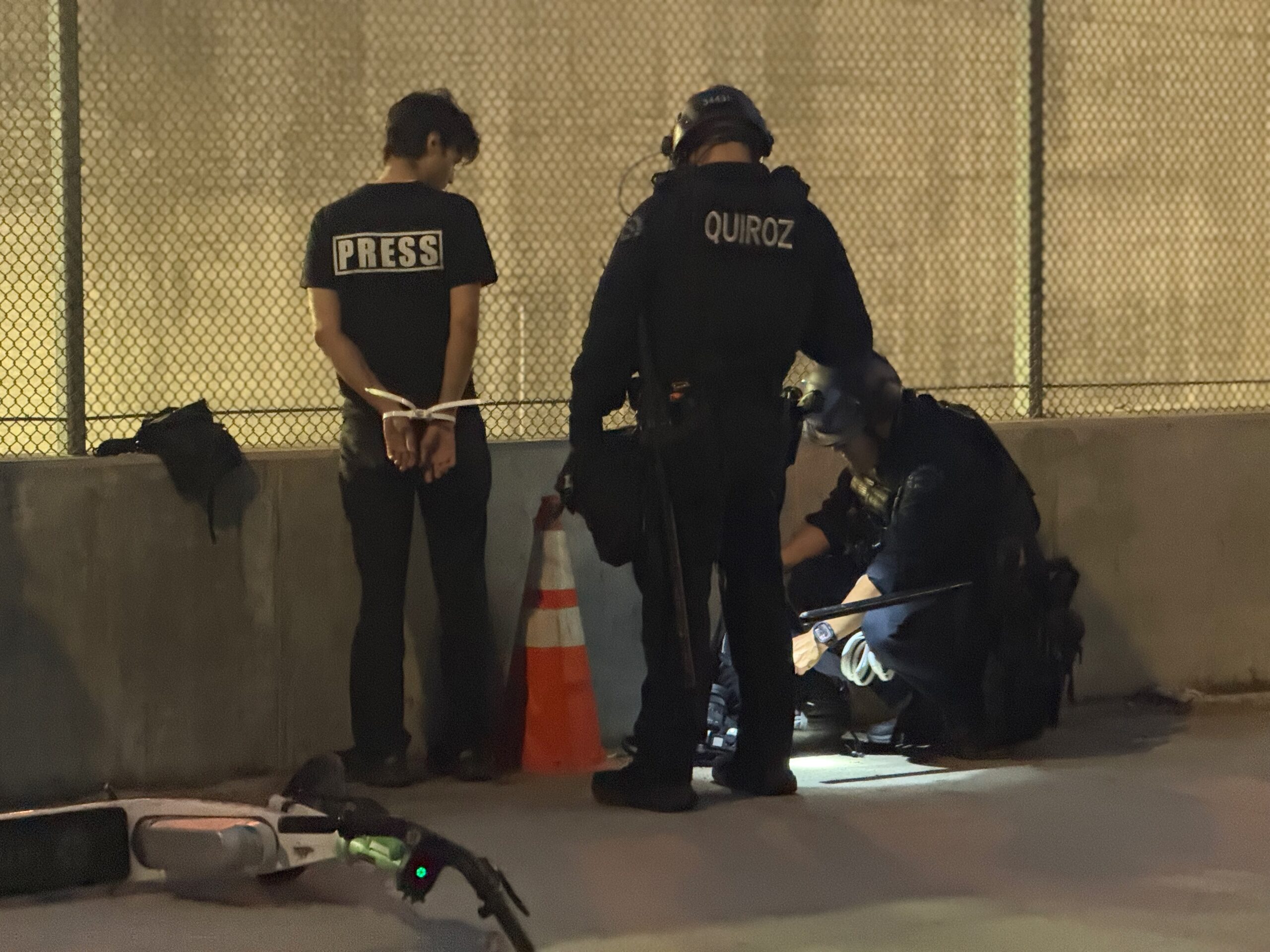
We only understood the stakes because journalists made it visible—filming, photographing, and broadcasting in real time. But by doing so, they became targets.
Since June, law enforcement in Los Angeles has interfered with or used force against journalists more than 150 times according to data from the US Press Freedom Tracker. A young photographer lost an eye. An LA Daily News reporter was hit in the head with a tear gas canister and diagnosed with a concussion. A New York Times journalist was shot and ended up in the hospital. A CNN reporter was detained live on air, while another narrated as officers were “happy” to push her. Several LA Times reporters were manhandled and obstructed. Independent and freelance journalists fared even worse.
Some coughed through the teargas and carried on. But as protests stretched on for months, rights were chilled and lives were changed. During the No Kings 3 protest at the end of March, a second young photographer lost an eye after being shot in the face with so-called “less lethal” munitions.
These were not isolated mistakes nor carefully targeted at a few violent protesters. In a single day, LAPD acknowledged firing over 1,000 rounds into the crowd. Collectively, law enforcement shot roughly 10,000 rounds at protesters and press in Los Angeles last summer.
The government response raised serious constitutional concerns—and courts agreed. Lawsuits brought by the Los Angeles Press Club, among others, led to federal injunctions against both DHS (including ICE and Border Patrol) and LAPD. Judges described the evidence as a “mountain” and an “avalanche.” The same images journalists captured to inform the public were now informing the courts.
(Disclosure: I serve on LAPC’s board and supported the cases. We did not seek a penny in damages, only the right of the press to do their job.)
This is the role of journalism in a democratic society. Without documentation, abuses fade into denial. Without witnesses, power goes unchecked.
A few years ago, Darnella Frazier filmed the murder of George Floyd. She wasn’t a journalist by profession. But in that moment, she performed an act of journalism that changed the world. She received the industry’s highest honor in the US, a Pulitzer Prize. The award demonstrated that press freedom isn’t about famous institutions, it’s about the sacred act of informing the public.
The annual World Press Freedom Index was revealed on Thursday by Reporters Without Borders (RSF). The US has seen a precipitous fall. In 2002 we were ranked 17th globally. In 2013 we dropped to 32nd. Last year the slide continued to 57th. This week, we sank to 64th.
Just since last year’s World Press Freedom Day, the US Press Freedom Tracker has reported 373 incidents here where journalists were mistreated—an average of more than one per day.
Our nation deserves better. Our nation demands better.
Press rights are not superior to other rights. But all other rights depend on press rights. Decades ago, one of the men who marched on the Edmund Pettus Bridge recognized that relationship.
In the words of John Lewis, “If it hadn’t been for the media, for brave, courageous journalists, the civil rights movement would have been like a bird without wings.”


Looking over the videographer’s shoulder at the No Kings 3 protest in downtown Los Angeles. Photos by Adam Rose.
Featured photo: A member of the press being detained during the No Kings 3 protest. Photo by Adam Rose.
About the Author

Adam Rose is the deputy director of advocacy for the Freedom of the Press Foundation and volunteers on the board of directors for the Los Angeles Press Club. He successfully lobbied for a California law that prohibits police from arresting or intentionally interfering with journalists covering protests. His efforts to protect press from police violence have resulted in federal court orders against both the US Department of Homeland Security and Los Angeles Police Department. An Emmy-nominated producer, Adam has over twenty years of experience as a journalist and editor for various media organizations, including LAist, Los Angeles Times, HuffPost, and CBS/Paramount.
World Press Freedom Day

Celebrate World Press Freedom Day
Reporters Without Borders and the Los Angeles Press Club invite you to gain insights from experts on the state of press freedom, including major developments both foreign and domestic.
This is a Guest Blogger contribution to the Democracy Center blog. The views and opinions expressed by blog contributors are not necessarily those of the Democracy Center nor the Japanese American National Museum (JANM). The Democracy Center makes every effort to verify the information provided but makes no representation as to the accuracy or completeness of that information. The Democracy Center is not liable for any losses, injuries, or damages from the display or use of this information. The Democracy Center does not accept unsolicited blog posts or proposals. These terms and conditions of use are subject to change at any time and without notice. Please direct any concerns to DemocracyCenter@janm.org. For more information on JANM’s terms of service, please visit: janm.org/about/terms-of-service