
Note: This blog post was written during the 2026 FIFA World Cup.
By Leia Tajima
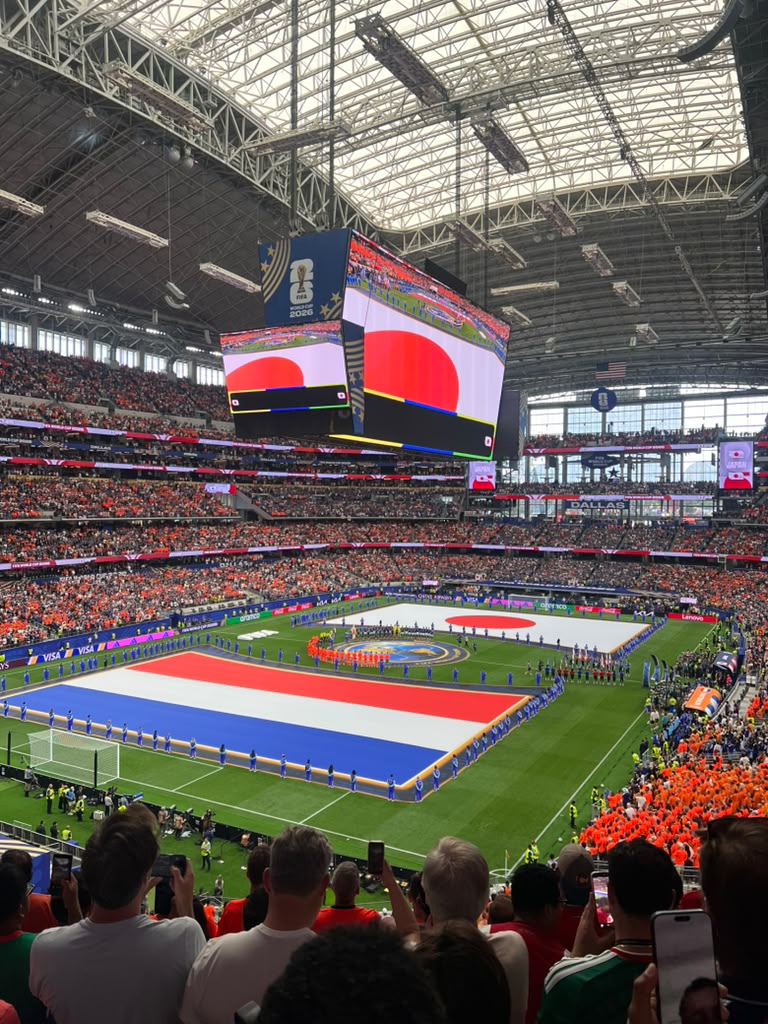
Every four years, billions of people around the world tune in to watch the FIFA World Cup, gathering across continents in stadiums, sports bars, living rooms, and public squares to watch the world’s single biggest sporting event. This year’s tournament, the largest in FIFA history, brings together a record forty-eight national soccer teams across Canada, Mexico, and the United States. Yet some of its most widely shared moments took place after the final whistle.
Following Japan’s matches against Sweden, Tunisia, Brazil, and others, hundreds of Japanese supporters uniquely remained in the stands to diligently clean up bottles, food wrappers, and other trash left behind by spectators—even after losing to Brazil. Images and videos of the fans cleaning up the stadiums once again won hearts across social media and made international headlines, renewing a familiar global fascination with Japanese politeness and public etiquette. But why do Japanese fans feel compelled to clean when they are under no obligation to do so, and why does this seemingly simple act of kindness continue to fascinate the rest of the world?
Essentially, Japanese fans clean because, in Japan, taking care of a shared space is understood not as a favor or someone else’s job, but as a personal responsibility. Beginning in early childhood, preschoolers are taught strict standards of etiquette, cleanliness, and consideration for others, including taking responsibility for cleaning the spaces they use. As they grow older, this develops into daily sōji at school, where students sweep corridors, wipe floors, clean bathrooms, and restore classrooms themselves.
The same expectations remain throughout adulthood: people carry their trash home, sweep beyond their own property, join neighborhood cleanups, return lost belongings, and tidy their seats after public events. Practices like these have made Japan one of the cleanest countries in the world, renowned for its deeply ingrained culture of kindness and mutual respect. Having lived in Japan for almost a decade myself, I have followed these routines and seen how quickly they become habitual. This is taught. This is expected. Guided by meiwaku, the desire not to burden others, and wa, the preservation of social harmony, the World Cup cleanup is not an occasional performance for the cameras, but it is the same civic responsibility Japanese supporters practice in their everyday lives.
At the same time, as a proud American who was born and raised in the US for seven years, I understand why these scenes appear so remarkable to audiences abroad. American culture also values kindness and civic responsibility, but the maintenance of public spaces is more often viewed as the responsibility of designated workers or institutions rather than an obligation shared by every individual. This difference does not make one culture inherently better than the other; it shows how culture shapes the responsibilities people instinctively consider their own. Living between both countries has made me recognize that civic duty is not reliant nor limited to laws or formal participation, but is also reflected in the everyday obligations a society teaches its citizens to uphold.
Those everyday obligations matter because they help create the conditions in which democracy can thrive. People are not captivated by the act of picking up trash itself, but by what it represents: respect for strangers, integrity when no one is watching, and a willingness to care for something shared by everyone. Japanese supporters do not know who will sit in those seats next or which employee would otherwise collect the trash. They may never meet those people, yet they act with them in mind. When citizens consistently consider how their actions affect others, they build public trust, strengthen their sense of shared responsibility, and make society more cooperative and humane. That trust cannot be produced by laws alone.
Democracy thrives under these conditions. Elections, constitutions, and laws provide its structure, but they cannot create a healthy society by themselves; citizens must also cooperate, respect shared spaces, and consider the public good without being forced. Japan is not a perfect model, nor are kindness and responsibility exclusive to Japanese culture. Rather, the cleanup offers one visible example of the mutual trust every democracy needs. Civic responsibility may involve voting or staying informed, but it also appears in quiet choices that receive no recognition. Perhaps the strength of a civic culture is measured not only by how people treat friends and family, but by how they treat strangers they may never meet again.
What unfolded in the stands offers a valuable lesson in civic engagement: responsibility begins with noticing what our communities need and choosing to help, even when no one asks us to. We share a duty to build a society in which others can thrive, and seemingly small actions, including cleaning up after ourselves, can strengthen the trust and care that hold communities together. If we want future generations to inherit a healthy democracy, we must treat its well-being not as someone else’s responsibility, but as our own.
Featured image: By Morogris – Own work, CC BY-SA 4.0, https://commons.wikimedia.org/w/index.php?curid=195272805
About the Author
Leia Tajima is a rising senior at the American School in Japan and a summer intern with the Democracy Center at JANM. Born in the United States and having lived in Japan for nearly a decade, she brings a Japanese American perspective to questions of culture, civic responsibility, and community. She is especially interested in psychology, mental health, and sociology, and in how empathy and mutual respect can strengthen public life.
This is a Guest Blogger contribution to the Democracy Center blog. The views and opinions expressed by blog contributors are not necessarily those of the Democracy Center nor the Japanese American National Museum (JANM). The Democracy Center makes every effort to verify the information provided but makes no representation as to the accuracy or completeness of that information. The Democracy Center is not liable for any losses, injuries, or damages from the display or use of this information. The Democracy Center does not accept unsolicited blog posts or proposals. These terms and conditions of use are subject to change at any time and without notice. Please direct any concerns to DemocracyCenter@janm.org. For more information on JANM’s terms of service, please visit: janm.org/about/terms-of-service