
By Melina Perez, Co-lead at Public Democracy Los Angeles
In a city as large and complex as Los Angeles, it’s easy to assume that foundational decisions—like rewriting the city’s constitution—happen far from public view. But earlier this year, something different unfolded. On January 11, 2026, thirty-six Angelenos (selected by lottery to reflect the city’s diversity) came together for a one-day civic assembly to answer a deceptively simple question: What should Los Angeles stand for?
What followed was a powerful demonstration of what’s possible when everyday people are given time, structure, and trust to shape decisions that affect their lives.
The mini-assembly—a scaled-down version of a citywide civic assembly—was organized as part of the Rewrite LA campaign and facilitated by Public Democracy Los Angeles, a volunteer-led initiative advancing deliberative democracy. It provided a rare space for timely, informed deliberation, helping residents engage with the city’s first charter revision in thirty years. Participants heard from experts, reviewed examples from other cities, and worked through complex questions about values, rights, and governance. More importantly, they listened to one another across lines of difference. What emerged wasn’t just a list of ideas, but a shared vision grounded in lived experience.
The Assembly’s recommendations, reimagining a new bill of rights and preamble for the city charter, were taken up by the Charter Reform Commission, a task force advising the City Council. The Commission translated these ideas into formal preamble language, which was approved in a vote in March. For the first time, residents selected by lot have directly influenced the foundational legal framework of the city. The charter’s preamble, which articulates the values guiding governance, will now reflect the voices of everyday Angelenos.
Civic assemblies are designed to do something our current systems often struggle with: bring together a representative group of residents, give them the tools to learn and deliberate, and empower them to shape real decisions. This approach strengthens democracy by grounding policy in public judgment rather than the status quo. In Los Angeles, that approach has now translated into tangible impact.
A New City Preamble
From the moment participants arrived, there was a mix of curiosity and anticipation. As one reflected, “Initial hesitation gave way to energy, curiosity, and a sense of ownership.”
By the afternoon, something remarkable happened. People of different ages, neighborhoods, and political perspectives began arriving at shared priorities. “We all want our basic rights met,” one participant said. Another left with a clearer sense that “we the people hold the power.”
At the center of their recommendations was accountability: a government committed to transparency and responsiveness. Participants also emphasized confronting historical injustices and grounding governance in human dignity. There was strong support for local control and neighborhood representation, alongside a broader call for meaningful civic participation that ensures that ordinary residents, not just institutions and elected officials, shape how the city governs itself.
These priorities will now be written into the document that guides Los Angeles governance, meaning future generations will live under a charter shaped, in part, by the residents of today.

A Space to Deliberate
The Assembly was hosted at the Democracy Center at the Japanese American National Museum in Little Tokyo, a central location offering an important ingredient in making Assemblies happen: space. Space to connect, to intentionally include more voices, and to treat public input as a foundation and not a showy formality. Purpose-built spaces make it possible to convene assemblies that are inclusive, structured, and genuinely participatory.
Creating these spaces requires investment—support, time, and resources. Civic assemblies, for example, provide compensation for participants, much like jury duty, making it possible for people from different walks of life to participate without practical barriers.
What This Means for LA
What we saw in Los Angeles offers a glimpse of a broader possibility: a democracy where governance is not only for the people, but increasingly shaped by them. As the charter reform process moves forward, this milestone offers both proof and momentum. It shows that civic assemblies can produce thoughtful, actionable outcomes and that institutions are willing to listen.
The approved language will now move forward as the Commission works to finalize the full charter, which will ultimately be put to City Council and LA voters.
The question now is not whether this model works. It’s how far we’re willing to take it.
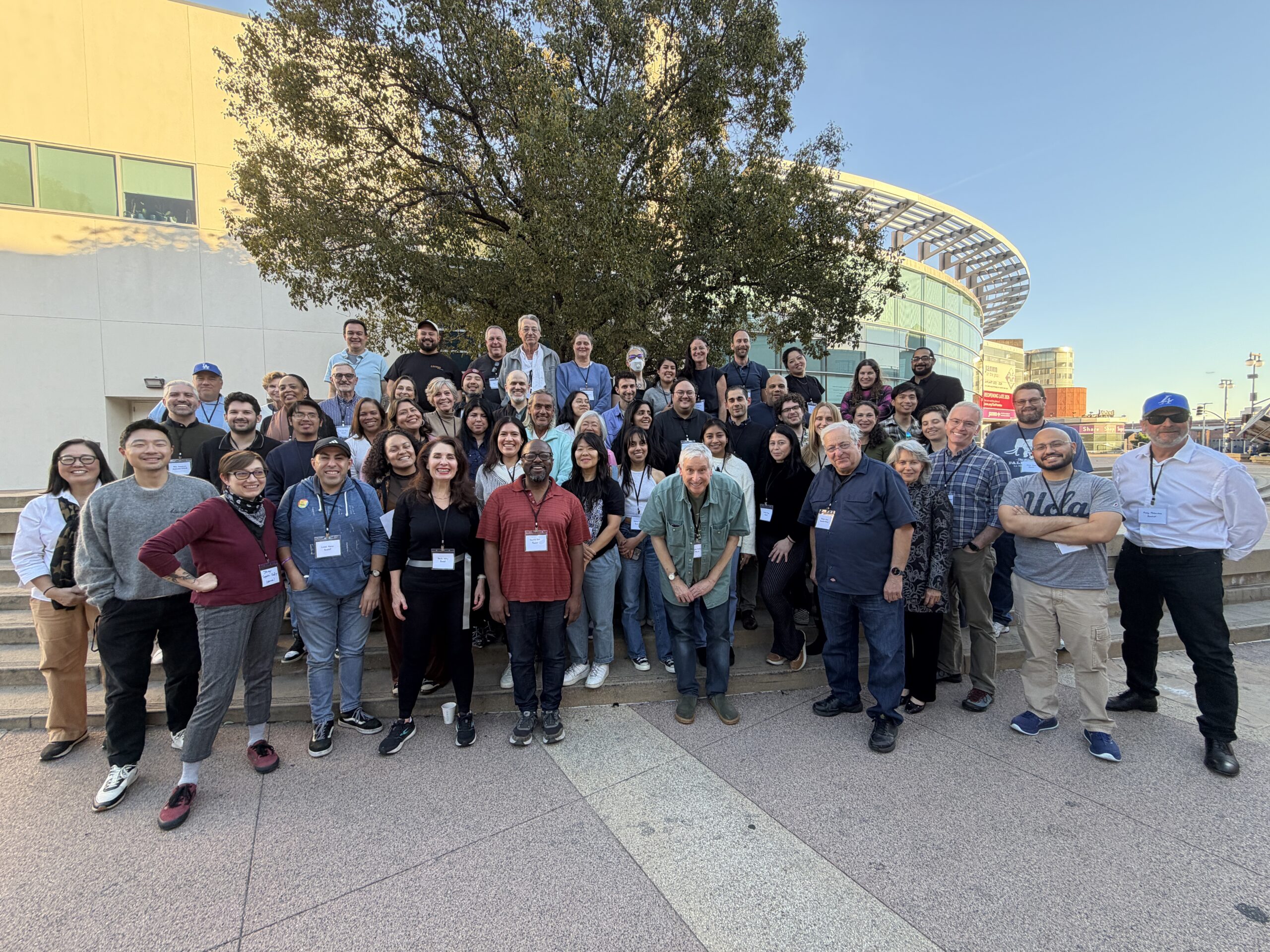
Featured image: Delegates from Rewrite LA’s Mini-Assembly on Charter Reform, January 11, 2026
Director’s Note
By James E. Herr, Director of the Democracy Center
At the Democracy Center at JANM, we believe that democracy isn’t something to simply talk about but something that we practice. Hosting the Civic Assembly for the City of Los Angeles Charter Reform Commission was a natural extension of that mission. Our space is designed to bring people together across differences, to encourage dialogue rooted in lived experience, and to elevate the voices of communities too often left out of formal decision-making. This assembly embodies those values in action.
Civic assemblies themselves are not new. Variations of this model have been used in countries like Ireland and France to address complex issues ranging from constitutional reform to climate policy. What distinguishes them is the commitment to representation and deliberation. Participants are selected by lottery to reflect the population, and they are given the time, information, and support needed to engage deeply with challenging questions.
Today there is a growing interest in civic assemblies because many people feel disconnected from traditional political processes. Assemblies offer a different approach that prioritizes listening, leading, and collective problem-solving over polarization and speed. They remind us that everyday people, when trusted and resourced, are fully capable of shaping thoughtful and forward-looking policy.
For us, supporting this work means more than hosting an event. It is about investing in a more inclusive civic culture where democracy is not some far off distant process, but one that is commonly shared, participatory, and alive within our communities and neighborhoods. Simply put, this is what the Democracy Center was built to do.