
By Sydney Galindo
Unseen Territories began with a refusal: a refusal to let flags speak only of nations, conquest, or borders. A refusal to let memory be flattened by symbols that were never made for us. I kept wondering what might happen if we took one of the most familiar symbols of national identity and asked it to carry something else.
Each artist created a flag with the intention of reclaiming a symbol traditionally associated with territory and power, transforming it into something that could hold their own histories, experiences, and ways of seeing the world. The film follows the artists as they bring their work beyond the studio and into public space through a caravan across the Las Vegas Arts District and downtown. Moving together through the city, the artists transformed the flags from individual works into public declarations of memory, presence, and identity.
About the documentary Unseen Territories

Unseen Territories is a documentary and community-driven performance project created on Southern Paiute land in Las Vegas with fourteen BIPOC artists. The project is also an exploration of who gets to shape the landscapes we inhabit. Flags have long been used to mark territory, establish power, and determine who belongs. For communities whose histories have been marginalized, displaced, or simplified, the landscape can feel as though it was authored by someone else. I wanted to ask what it might look like to take some of that authorship back.
In Unseen Territories, artistic practice becomes a form of witness. The artists preserve lived experiences through their own voices and creative languages, creating work that holds memory and loss alongside joy and pride. When the caravan enters the streets, the familiar landscape becomes open to reinterpretation. Public space becomes a place where stories can be reclaimed, reshaped, and celebrated on their own terms.
Civic Season felt like a natural moment to bring Unseen Territories into the conversation. As the country marks 250 years since the signing of the Declaration of Independence, we are being asked to look backward while imagining what comes next. For me, that also means asking who has had the power to shape the story of this country, whose histories have been made visible, and whose have been left out.
Whose histories became monuments? Whose symbols became national? Whose presence was made visible, and whose was pushed out of sight?
Reflections
After the screening, the Q&A revealed how deeply the audience had connected with the project. I felt kapwa in the room: a sense of shared humanity and connection that extended beyond the film itself. That feeling carried naturally into the workshop, where something deeply personal became a shared experience.
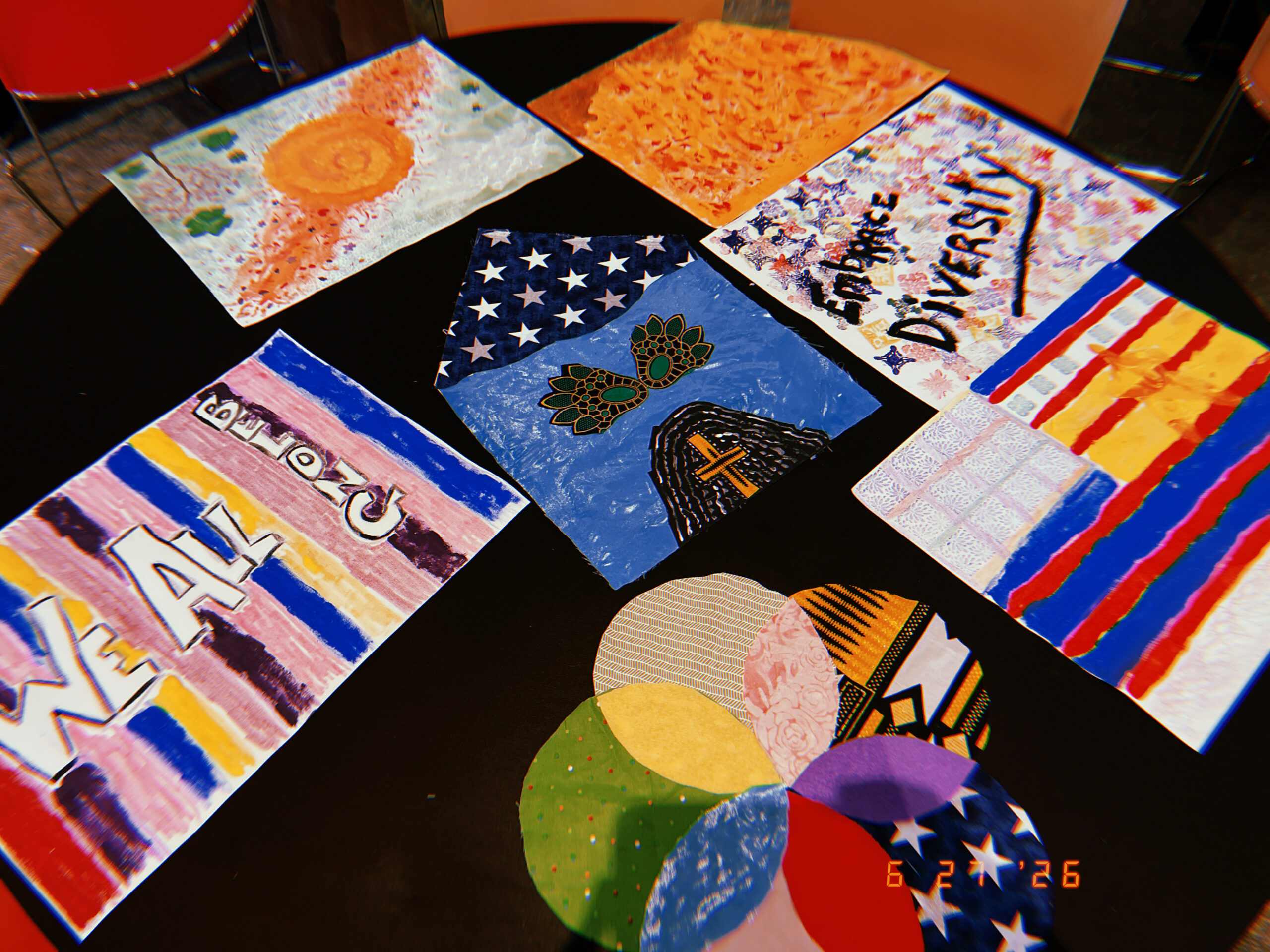
What struck me was how quickly the room became collaborative. People were not only making their own flags; they were also looking at one another’s work, asking questions, sharing materials, and discussing what they wanted their flags to represent. There was an ease to the exchange that I found meaningful.
Several people spoke about wanting to see the project continue and about how meaningful it was to encounter a film that approached identity and belonging through art, joy, and participation. For me, that response was part of the work itself.

A blank flag can become an unexpectedly intimate space. It can hold a family history, a place, a language, a memory, a loss, a future. During the workshop, there was a sense of joy in the room; people laughed, compared what they were making, and enjoyed the simple act of creating something together. That joy matters. The politics of identity and belonging can be heavy, but reclaiming them does not always have to be. There can be pleasure in making yourself visible and celebration in gathering around one another’s stories.
This is where I believe art can become a civic practice. Not because every artwork needs to make a political argument, but because art can change who we see, what we remember, and how we understand the spaces around us. It can challenge the assumption that a landscape is neutral, that history is finished, or that the symbols we inherit are the only symbols available to us.
As we look back at 250 years of American history and imagine what comes next, perhaps we need to think not only about the stories we have inherited, but about the stories we are still capable of making.
Maybe the work of belonging is not about finding ourselves within an existing map, but asking whether we have the power to redraw it.
Author Bio

Sydney Galindo is a Filipina American multidisciplinary artist of Visayan and Indigenous descent. A bridger of realms, her work moves through art, film, and curatorial projects, exploring the deeper connections between ourselves, one another, and the world around us.
Galindo holds a master’s degree in Museum Studies and is the founder of Artist Resistance Through Solidarity (ARTS), a WOC-led foundation established in 2024 to support BIPOC artists, educators, and cultural workers through direct funding.
Images: Courtesy of Sydney Galindo.
This is a Guest Blogger contribution to the Democracy Center blog. The views and opinions expressed by blog contributors are not necessarily those of the Democracy Center nor the Japanese American National Museum (JANM). The Democracy Center makes every effort to verify the information provided but makes no representation as to the accuracy or completeness of that information. The Democracy Center is not liable for any losses, injuries, or damages from the display or use of this information. The Democracy Center does not accept unsolicited blog posts or proposals. These terms and conditions of use are subject to change at any time and without notice. Please direct any concerns to DemocracyCenter@janm.org. For more information on JANM’s terms of service, please visit: janm.org/about/terms-of-service